 danny@fastfakediploma.com
 Whatsapp: +44 7395563575
 Fake Certificate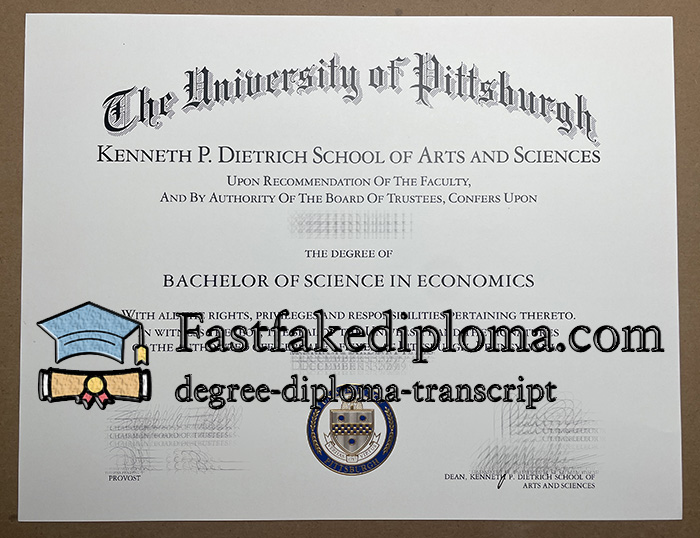
Where to get a University of Pittsburgh diploma?
The University of Pittsburgh (Pitt) is a state-related research university in Pittsburgh, Pennsylvania, United States. The university is composed of seventeen undergraduate and graduate schools and colleges at its urban Pittsburgh campus, home to the university’s central administration and over 31,000 undergraduate and graduate students. The 132-acre Pittsburgh campus includes various historic buildings that are part of the Schenley Farms Historic District, most notably its 42-story Gothic revival centerpiece, the Cathedral of Learning. Pitt is a member of the Association of American Universities and is classified among “R1: Doctoral Universities – Very high research activity”. Realistic University of Pittsburgh diploma, buy fake diploma online
Pitt traces its roots to the Pittsburgh Academy, founded by Hugh Henry Brackenridge in 1787. While the city was still on the edge of the American frontier at the time, Pittsburgh’s rapid growth necessitated the establishment of a proper university, and Pitt’s charter was amended in 1819 to confer university status on it as the Western University of Pennsylvania. After surviving two fires and several relocations, the university moved to its current location in Pittsburgh’s Oakland neighborhood, and by act of the state legislature, was renamed the University of Pittsburgh in 1908. Pitt was a private institution until 1966, when it became part of the Commonwealth System of Higher Education.
University of Pittsburgh Degree
- Undergraduate degrees
- Associate Degrees: Offered through some programs or partner pathways (less common than bachelor’s degrees at Pitt itself).
- Bachelor’s Degrees: The most common undergraduate credential, typically earned in 4 years for full-time students. Programs cover fields such as Arts & Sciences, Engineering, Business, Education, Health Sciences, and more.
- Graduate degrees
- Master’s Degrees: One- to two-year programs across disciplines; includes professional master’s programs (e.g., MBA, MS, MA) and research-focused tracks.
- Doctoral Degrees (PhD, Doctor of Education, Doctor of Medicine—MD, etc.): Advanced research and professional training culminating in dissertation work or clinical credentials.
- Professional Degrees: Accredited programs in fields like Medicine (MD), Dentistry (DDS/DMD), Law (JD), and Pharmacy (PharmD), often involving several years of study and clinical practice.
- Postgraduate and professional certificates: Shorter credential programs designed to supplement existing degrees or provide specialized skills.
Key features
- Interdisciplinary options: Many programs encourage cross-school collaboration (e.g., combining engineering with business, public health, or arts and humanities).
- Research opportunities: Pitt is a major research institution with extensive lab work, grant opportunities, and partnerships with industries and hospitals.
- Strong health sciences: Home to the University of Pittsburgh Medical Center (UPMC) affiliated ecosystem, which enriches programs in medicine, nursing, public health, and biomedical sciences.
- Global opportunities: Exchange programs, study abroad options, and international collaborations are available through various departments.
Admission and outcomes
- Admissions vary by program, with competitive deadlines and prerequisites for undergraduate, graduate, and professional degrees.
- Outcomes often highlight strong placement in graduate programs, medical residencies, research positions, and employment in industry or academia.