 danny@fastfakediploma.com
 Whatsapp: +44 7395563575
 Fake Certificate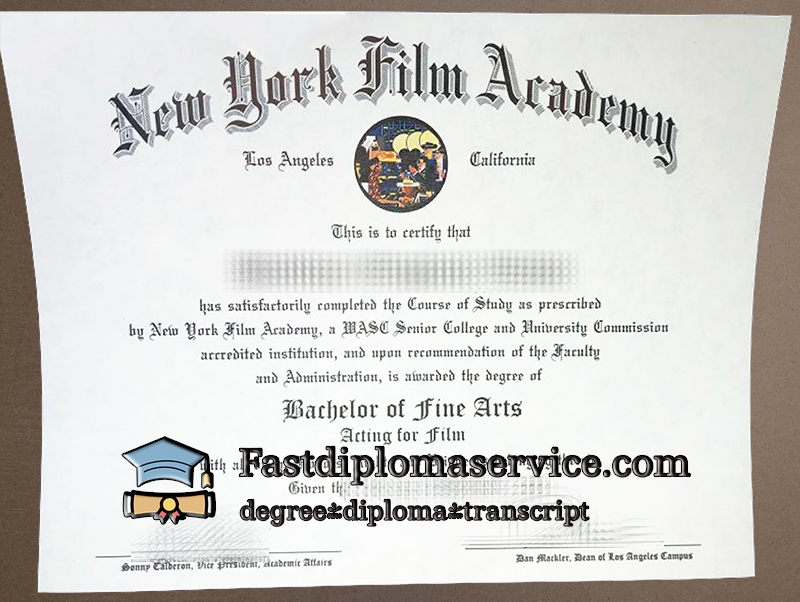
How long to order a New York Film Academy diploma?
New York Film Academy – School of Film and Acting (NYFA) is a private for-profit film school and acting school based in New York City, Los Angeles, and Miami. The New York Film Academy was founded in 1992 by Jerry Sherlock, a former film, television, and theater producer. It was originally located at the Tribeca Film Center. In 1994, NYFA moved to 100 East 17th Street, the former Tammany Hall building in Union Square. After 23 years of occupancy, the academy relocated from Tammany Hall to 17 Battery Place. buy New York Film Academy fake degree online.
As of 2012, the school had 400+ employees and over 5,000 students per year (many of them from outside the United States). NYFA offers master’s, bachelor’s, and associate degrees, as well as one- and two-year conservatory programs, short-term workshops, and youth programs and summer camps.
Get a New York Film Academy Degree Online
- The New York Film Academy (NYFA) is a private, accredited film school with campuses in New York City, Los Angeles, and other locations worldwide. It focuses on hands-on, project-based learning across film, acting, and media programs.
- NYFA offers a range of degree programs at bachelor’s, master’s, and certificate levels, designed to prepare students for professional work in the entertainment industry.
Degree programs (typical offerings)
- Bachelor’s Degrees (undergraduate)
- Bachelor of Fine Arts (BFA) in Film, Acting for Film, Producing, Screenwriting, Digital Photography, Animation, Game Design, and related disciplines.
- Programs emphasize practical, screen-ready training with real-world production experience.
- Master’s Degrees (graduate)
- Master of Fine Arts (MFA) in Film & Television Production, Screenwriting, Producing, Cinematography, or Acting for Film (often offered in a modular or intensive format).
- MFA programs usually focus on advanced craft, creative development, and industry networking, with opportunities to work on substantial film and media projects.
- Associate and Other Degrees
- Some campuses offer Associate Degrees or specialized certificates that provide foundational skills with a shorter time to completion.
- Certificate programs are also available for professional development or career transition, often focusing on specific areas like directing, editing, or VR/AR.
Key features of NYFA degrees
- Hands-on learning: Core emphasis on practical production experience, with students working on multiple film sets, productions, and post-production projects.
- Industry exposure: Regular workshops, masterclasses, and guest speakers from the film and television industry.
- Accelerated formats: Many programs are designed to be intensive, enabling students to complete degrees in shorter periods compared to traditional programs.
- Portfolio-driven: Coursework culminates in showreels, demo reels, short films, or completed features that serve as professional showcases.
- Global perspective: Access to global campuses and diverse cohorts, with opportunities for cross-campus projects.
Admission and curriculum considerations
- Admissions typically require a portfolio or audition for certain programs (especially in acting, directing, and cinematography), along with academic transcripts and a statement of purpose.
- The curriculum blends theory with practical production coursework, script development, editing, sound design, and post-production workflow.
- Facilities usually include sound stages, editing suites, color grading suites, and high-end camera equipment.
Pros and potential considerations
- Pros: Immersive, career-oriented training; strong industry connections; fast-tracked project experience; international exposure.
- Considerations: Programs can be intensive and cost-intensive; some critics note that traditional liberal arts depth may be lighter than more research-focused programs. Prospective students should weigh career goals, preferred learning style, and budget.